
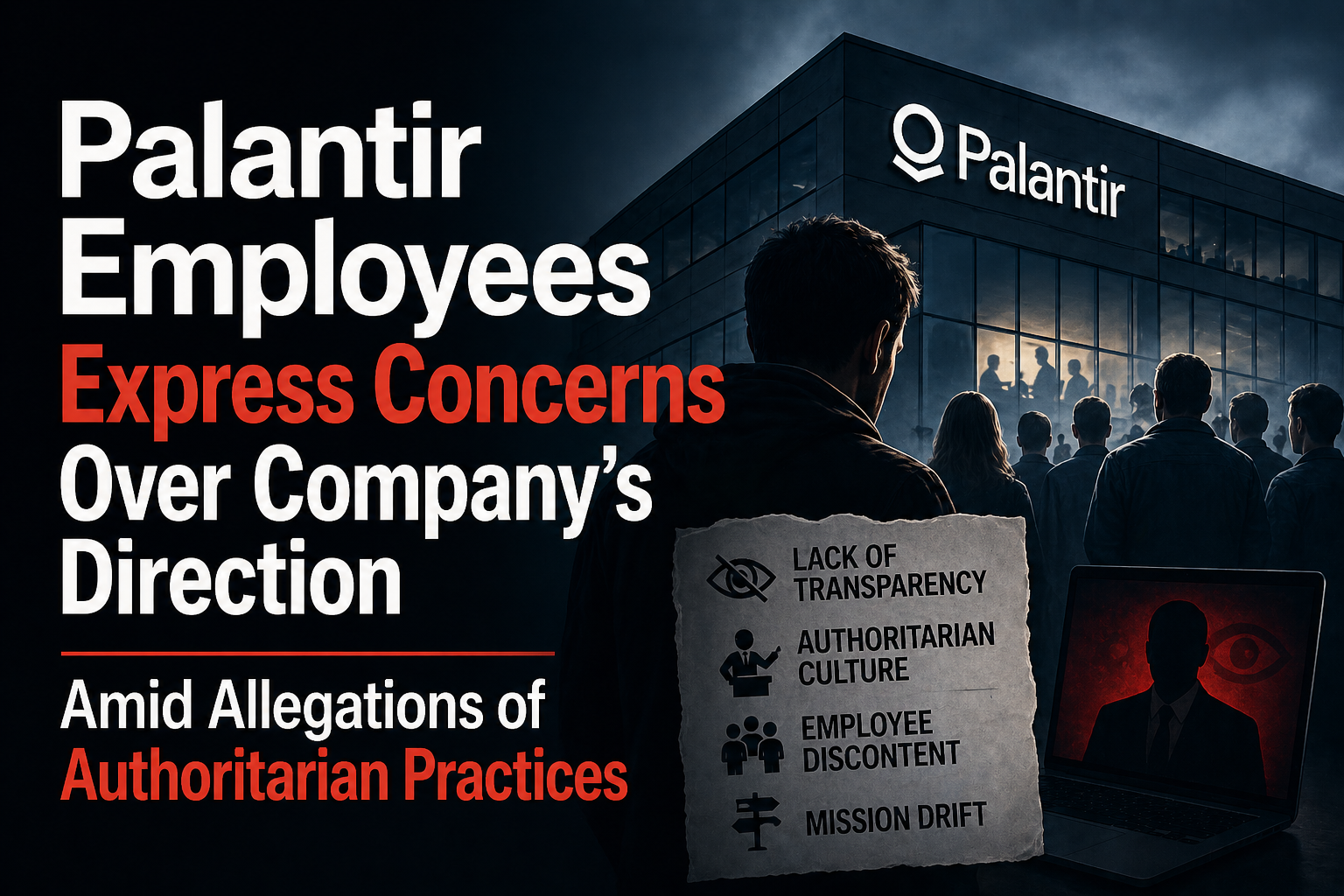
Palantir Employees Voice Unease as Allegations of Authoritarian Tactics Surface
It’s not every day you hear employees openly question the direction of a well-known tech giant like Palantir, yet recent murmurs hint at a darker undercurrent. While some commentators suggest the company’s “descent” into authoritarian practices is new, others argue that Palantir’s controversial role in surveillance and defense has been baked into its DNA from the start. One biting community remark likened their latest product offerings to something out of a dystopian fantasy—“Eye of Sauron Pro,” anyone?—a nod to the company’s deep ties to government agencies and surveillance work.
What’s striking is the sense of disillusionment, especially considering the enthusiasm reportedly emanating from the CEO, who seems unabashedly thrilled about enabling military operations. This paints a complex picture: on one hand, innovation in data analytics for national security; on the other, ethical questions about the implications of that work.
A practical takeaway here is how big tech’s culture and product choices often force employees to reconcile career ambitions with personal ethics—something seen at companies like Palantir, where the gritty realities of data-driven intelligence collide with individual values. It echoes broader tech industry challenges, where cutting-edge innovation sometimes clashes with societal impact, leaving employees caught in the middle and sparking backlash from within.
Introduction
Palantir has long carried a reputation that’s equal parts mysterious and controversial. For years, the company’s involvement with government agencies and surveillance programs prompted whispers and raised eyebrows. But now, some of its own employees are openly voicing discomfort with the company’s path, especially amid allegations of authoritarian practices. There’s a growing sense that this isn’t a sudden “descent,” but rather a continuation of what many have known all along—just rationalized away in the name of a paycheck.
One can’t help but notice the biting sarcasm in community jabs like the quip about their latest product being dubbed “Eye of Sauron Pro,” highlighting the discomfort with Palantir’s perceived surveillance-heavy toolkit. And then there’s the CEO, who some describe as unapologetically energized to push tools that enable military operations—a characterization that adds fuel to the fire of internal and external criticism alike.
This isn’t a hypothetical debate. Look at how employees at companies like Amazon have spoken out about the ethical implications of certain contracts and the tech being used by government agencies. It’s rare but crucial when insiders begin questioning their organization’s direction from the inside. The concern here isn’t just about optics; it touches on real ethical challenges facing employees tasked with developing technologies wielded in sensitive and often troubling contexts.
Overview of Palantir Technologies and Its Industry Role
Palantir Technologies has always occupied a unique, and often controversial, niche in the tech world. Known for its data analytics platforms that serve government agencies and large enterprises, Palantir has built a reputation as a powerful player in intelligence and defense sectors. Its software digs through massive, complex datasets to provide actionable insights—think of it as a digital magnifying glass for organizations trying to make sense of chaos.
But here’s where things get tricky. Palantir’s work with intelligence and military contracts naturally raises eyebrows. The company isn’t shy about embracing these projects, which some insiders and critics describe as authoritarian or deeply invasive. The tongue-in-cheek community jabs like “Have you tried our new product, Eye of Sauron Pro?” highlight a growing unease with Palantir’s positioning—suggesting its surveillance tools are more dystopian than usual tech fare.
To give this some color, consider a real-world example: Palantir’s involvement with the U.S. Immigration and Customs Enforcement (ICE). The software has reportedly been used to track undocumented immigrants, which spurred protests from human rights advocates and even spurred internal debates among some Palantir employees. This conflict between cutting-edge data analysis and ethical boundaries is a tightrope Palantir has been walking for years—which explains why some employees now openly question the company’s direction.
In a nutshell, Palantir isn’t your average Silicon Valley startup. Its ambitions intersect with thorny political and ethical questions, which only complicates how the outside world—and even those inside—view the company’s mission.
Recent developments triggering employee concerns
Palantir has never been a company shying away from controversy, but recent chatter among employees hints at a tipping point. There’s this growing unease not just about where the company is headed, but also about what it inherently stands for. Some insiders voice that Palantir was “always sinister” — a blunt take that, frankly, resonates if you’ve followed their history of working with intelligence and military agencies. For years, employees may have brushed aside the ethical gray areas, rationalizing them as part of the job or career-building moves. But now, that rationalization seems to be wearing thin.
One sharp community jab called out the company’s new tools, jokingly dubbed “Eye of Sauron Pro,” a nod to the infamous all-seeing eye from Tolkien’s lore. It’s a darkly clever critique signaling fears of invasive surveillance and authoritarian overreach embedded deeply in Palantir’s DNA. The CEO, described as “exhilarated to be facilitating war,” only compounds these worries, painting a picture of leadership that not only accepts but embraces the company’s role in global conflicts.
This sentiment might sound alarmist on the surface. But let’s not forget, similar ethical reckonings have rattled other tech giants historically involved in defense contracts, such as when Google employees pushed back against Project Maven—a Pentagon AI initiative. Palantir’s internal disquiet seems to capture the same clash between cutting-edge tech ambitions and uncomfortable political realities.
Why Addressing Workplace Culture and Ethics at Palantir Matters
Palantir’s internal turmoil isn’t just a PR headache—it’s a sign of deeper cracks in the company’s foundation. The allegations of authoritarian practices and employees speaking out reveal a workplace where culture and ethics may have been sidelined for rapid growth or strategic advantage. These aren’t just whispers in the office hallway; they highlight a fundamental tension between corporate ambition and individual values.
What’s striking is the intensity of some of the criticism. Comments like “Palantir was always sinister” or the tongue-in-cheek jab about the “Eye of Sauron Pro” product suggest a pervasive skepticism—not just about the company’s products but about its very soul. This isn’t just a new problem; it’s the kind of cultural unease employees might have quietly tolerated, rationalizing it as part of their career trajectory. But once this tension surfaces publicly, ignoring it becomes riskier.
Workplace culture and ethics directly shape how employees engage with their work and the broader impact their company has. Look at Microsoft’s transformation in the past decade—Satya Nadella’s focus on empathy and ethical AI wasn’t a branding move; it grounded internal behavior and product development in a new, more transparent ethic that improved employee morale and public trust.
Palantir’s situation shows that tech companies, especially those involved in sensitive fields like defense or surveillance, need to reckon honestly with their culture. If they don’t, they risk losing talent, public goodwill, and ultimately, their position in the market. Ignoring the ethics conversation isn’t just idealistic—it’s strategically shortsighted.
Background on Palantir’s Corporate Identity
Palantir’s image has always been a bit of a Rorschach test—some see it as a cutting-edge data analytics powerhouse, others as a shadowy warden of surveillance. The recent employee unrest has brought a lot of underlying tension to the surface, but it’s not like this came out of nowhere. If you’ve ever followed discussions about Palantir, especially in tech circles, the company’s “sinister” reputation isn’t new. The playful jabs—like the joke about their new product being “Eye of Sauron Pro”—highlight a widespread skepticism about Palantir’s ethical compass. It’s not just idle banter; it reflects serious worries about how their software, originally designed for intelligence and policing, gets repurposed in ways that don’t always sit well with the public or even the company’s own folks.
What’s interesting is how this perception colors internal morale. Several former and current employees have expressed discomfort over what feels like a drift toward authoritarian uses of technology—far from the idealistic startup ethos we associate with Silicon Valley. The CEO’s enthusiasm about facilitating war efforts, for example, is seen by some as emblematic of a company culture that’s embraced power rather than questioned it.
Consider the example of how Palantir’s tech was used by immigration enforcement agencies; it sparked protests and ethical debates outside the company but rarely surfaced openly inside, until now. This disconnect between Palantir’s identity in the eyes of the public and its internal self-image is at the heart of the current unease.
Company Mission and Core Values Under Scrutiny
Palantir has long been painted as a company walking a fine line between innovation and controversy, but lately, internal whispers—and some outright critiques—suggest that the mission and values it touts are becoming harder to stomach for its own people. One blunt community observation summed it up: Palantir was never some benign tech giant; it has always had this “sinister” aura that employees amusingly justified as part of their career path. In other words, for years, many insiders compartmentalized the ethical gray areas, perhaps pushing them aside for the paycheck or prestige. But with mounting allegations about its authoritarian leanings, that rationalization feels more fragile than ever.
The “Eye of Sauron Pro” joke thrown in by a community member isn’t just snark—it highlights how Palantir’s tools have become synonymous with invasive surveillance. This isn’t just paranoia; Palantir’s work with intelligence agencies and military clients has been rightly scrutinized for ethics. One can’t ignore the pointed remark about the CEO seeming “exhilarated” by the company’s facilitation of war activities—a sentiment echoing concerns about how deep the commitment runs to certain government contracts, often at the expense of privacy and human rights.
Think of it like the famous case with IBM in the mid-20th century, when it was revealed how their punch card machines were used in troubling ways during the Holocaust—not to paint Palantir as the new IBM, but to remind us that tech companies’ missions can be twisted by their clients’ agendas. For employees deeply invested in Palantir’s original mission statements, these revelations are a tough pill to swallow. It raises a complex question: can a company’s core values survive when its actions and contracts suggest a very different reality?
Overview of Leadership and Management Style at Palantir
When it comes to Palantir’s leadership, you hear a mix of fascination and unease swirling around. The comments floating around—especially from insiders and industry watchers—paint a picture less of a company slipping into something sinister, and more of one that’s worn that badge from the start. One commenter perfectly captured it: “Palantir was always sinister; you just rationalized it for career reasons.” That’s not just cynicism—it’s a nod to a culture that quietly blends high ambitions with a willingness to operate in ethically gray areas.
Their CEO, Alex Karp, often draws stark reactions. Some describe him almost like a character straight out of a dystopian novel—“exhilarated to be facilitating war.” That’s quite the indictment, but it’s a reflection of the company’s close ties to government intelligence and defense contracts. The quip about their so-called product, “Eye of Sauron Pro,” captures that feeling well—an omnipresent, all-seeing gaze, veiled behind slick tech marketing.
From a leadership viewpoint, this hints at a management style that’s unapologetically bold—some might say aggressive—and indifferent to mainstream moral scruples. Compare that to something like Google’s famously open culture, Palantir looks a lot less collaborative and more top-down, perhaps even secretive.
As a real-world example, remember when Palantir’s technology heavily assisted immigration enforcement agencies? That sparked protests and employee dissent, showcasing how leadership’s vision can clash hard with the workforce’s conscience. It’s a classic case of leadership driving strategy with little room for internal debate, pushing employees to toe the line or rethink their place in the company altogether.
Historical Challenges and Controversies
Palantir has long occupied an uneasy space between cutting-edge tech innovation and deep ethical quandaries. From the start, many have viewed the company’s mission as somewhat “sinister,” with a rationale mostly tied to career advancement rather than moral clarity. One community member summed it up bluntly: Palantir’s not so much descending into questionable territory as much as it _always_ was—employees just chose to look the other way.
Of course, the company’s reputation isn’t helped when critics jokingly brand its latest products as “Eye of Sauron Pro,” alluding to the omnipresent surveillance themes that Palantir’s software can enable. Such nicknames aren’t just dark humor—they reflect genuine unease about how tools originally designed for data integration and intelligence can edge toward authoritarian control.
It’s telling, too, that there’s a near-obsessive focus among skeptics on Palantir’s CEO, who some say seems almost energized by the company’s involvement in military and intelligence operations. This perception colors internal dissent and fuels the narrative of a company profiteering off conflict and control.
To put it in perspective, think of the backlash Cambridge Analytica faced a few years back for harvesting data for political manipulation. Palantir isn’t exactly leaking personal data, but the ethical fog around what its platforms enable—governments tracking citizens, warzones monitored—raises similarly grim questions. Employees questioning the direction aren’t imagining this; they’re voicing a deeper conflict between tech promise and moral cost.
Reports of Employee Discontent
It’s hard to ignore the growing unease among Palantir employees, even if direct public discourse on platforms like Hacker News, Reddit, or Stack Overflow is surprisingly sparse. The conversations that do bubble up tend to be sharp and cynical, with some insiders and observers calling out the company’s ethically dubious trajectory as nothing new, just now being impossible to ignore. One of the more telling community quips even joked about their product lineup—mocking it as if Palantir’s signature surveillance tools were straight out of a dystopian fantasy, dubbing a rumored new offering “Eye of Sauron Pro.” It’s a biting commentary, but it highlights a real perception among staff and outsiders that the company’s direction feels deeply authoritarian, a far cry from a neutral tech firm.
What stands out is the personal assessment of Palantir’s CEO by some commenters. They don’t see a cautious leader navigating complex moral terrain, but rather someone “exhilarated” by his role in enabling government surveillance and military operations. That’s a statement packed with frustration and concern—feelings that often simmer quietly in large tech firms but are rarely so bluntly expressed.
From a practical standpoint, these sentiments can’t be dismissed as mere employee gripes. When a workforce starts questioning the ethics behind their work, it affects morale and retention. Just look at Microsoft during the AI ethics debate about their facial recognition tech—employee pushback there led to more transparency and guidelines. Palantir seems to be at a similar crossroads, but only time will tell if they listen or double down.
The growing concerns voiced by Palantir employees underscore a critical juncture for the company as it navigates public scrutiny and internal dissent. Allegations of authoritarian practices challenge not only Palantir’s corporate culture but also its reputation as a leader in ethical technology development. Addressing these issues transparently and proactively is essential for restoring employee trust and ensuring long-term organizational sustainability. By fostering an open dialogue, revisiting governance structures, and reaffirming a commitment to ethical principles, Palantir can realign its strategic direction with the values of its workforce and stakeholders. Ultimately, the company’s ability to adapt and respond to internal concerns will determine its capacity to lead responsibly in a rapidly evolving industry, balancing innovation with accountability. The path forward requires courage, clarity, and a steadfast commitment to building a culture that empowers employees while maintaining integrity at every level.