

A lil context:
Sometimes, the most telling stories are hidden in the everyday—a thread of texts flickering over years, quietly revealing how once-close friendships unravel. That’s exactly what happened when I dove into 3.5 years of Telegram chats with my childhood best friend. We started as inseparable, texting hundreds of messages daily, sharing daily life even after I moved countries. But slowly, the rhythm shifted: messages thinned, the warmth waned, and eventually, our connection morphed into something distant yet familiar.
What struck me wasn’t just the decline in volume but the subtle alignment with big life events—moves, new partners, shifting priorities. It wasn’t a tragedy; it was natural. Friendships evolve, especially across distance and adulthood’s demands. But seeing it charted as colored lines and gray bars made the abstract heartbreak real. It’s a reminder that communication isn’t just about quantity—it’s about presence.
Reddit threads and forums often debate how to preserve long-distance friendships; folks on Reddit emphasize empathy for changing lives, while data-focused communities like r/DataIsBeautiful highlight patterns without judgment. This project sits somewhere in between—a vulnerable and analytical look at friendship’s lifecycle.
In the end, it’s a tool to understand ourselves and those we care about better. After all, sometimes seeing the story laid bare helps us accept its next chapter.
Introduction: The Power of Digital Memories
There’s something uniquely compelling—and a little terrifying—about scrolling through years of text messages and watching a friendship unravel before your eyes. In this digital age, conversations are more than just words; they’re a living timeline of shared moments, conflicts, and quiet driftings apart. When one friend moves continents, and life’s pace changes, those hundreds of daily messages can slow to a trickle, marking the subtle fade of once unbreakable bonds.
Documenting a childhood friendship’s breakdown through Telegram chats isn’t just a data experiment—it’s an emotional excavation. These texts reveal how distance, new relationships, and evolving priorities layer complexity onto connections. It’s not all melancholy; shifts in communication often reflect natural growth rather than outright fallout. But seeing it quantified—the peaks and declines plotted—brings a certain clarity.
For example, the original poster’s experience resonated with many, sparking conversation about how friendships evolve and how technology both connects and exposes emotional gaps. The visualization of a friend asking why anyone would message 400 times a day highlights how communication styles vary wildly, and expectations can shift over time.
In a way, digital memories allow us to read the subtext between the lines—life events cast shadows across daily chatter, and what isn’t said often speaks loudest. It’s a reminder that sometimes, friendship’s endurance is less about constant contact and more about understanding the changing rhythms beneath the messages.
The Significance of Text Messages in Preserving Personal Histories
Text messages are like digital footprints left across the intimate landscapes of our lives—sometimes mundane, often revealing, and occasionally heartbreaking. Unlike cryptic diary entries or staged photo albums, texts capture conversations as they happened: raw, unscripted, and frequently imperfect. They freeze moments—snippets of laughter, arguments, worries, and plans—that together weave a rich tapestry of relationships unfolding over time.
In the case of analyzing years of chat history with a childhood best friend, texts become a living archive showing not only what was said but how the rhythm of communication changed, reflecting emotional distances and growing apart. There’s something deeply human about witnessing the ebb and flow of friendship through timestamps and message counts—a digital echo of shared lives diverging.
Take the example of two longtime friends who moved countries. Initially constant back and forth, their messaging gradually dropped as life’s demands and physical distance made sustained connection harder. Seeing that change in message frequency and content doesn’t just chronicle a relationship—it makes the unraveling tangible. It highlights how technology, while meant to bridge gaps, can sometimes illuminate the invisible fractures in bonds.
For anyone interested in personal history, texts aren’t just communication—they’re a map of memory, signaling how people grow, change, and sometimes drift apart without dramatic slams of doors, only the soft click of messages left unread.
Why Documenting the End of a Childhood Friendship Matters
It might sound a little odd, but tracking the slow unraveling of a close childhood friendship through something as mundane as text messages actually holds a surprising amount of value. Friendships, especially those that span decades, carry emotional weight and layers you rarely get to see all at once. When they begin to fade, especially across distances and changing life chapters, the shift often feels sudden—yet the reality is usually a subtle, complex drift that’s hard to articulate in the moment.
By documenting your communication patterns, you create a tangible record that helps make sense of what often feels like vague, painful “fading away.” It’s not about assigning blame, but about honoring the history and recognizing the natural winding paths relationships take as people grow into different versions of themselves. For example, in one case, a friend moved abroad and with it, daily texts dropped from hundreds to a fraction, exposing how physical distance and evolving priorities reshaped their bond.
This kind of documentation can also serve as therapeutic clarity—an honest mirror showing when and how lives diverged without needing to reconstruct memories from biased feelings or fuzzy recollections. Plus, it offers a unique chance to identify moments worth cherishing or even discussing openly with the other person, if communication is still possible. So, rather than fearing the end, it can be a way to respectfully witness it—and maybe, just maybe, find a way to preserve the friendship in a new form.
Understanding the Emotional Impact of Friendship Breakdowns
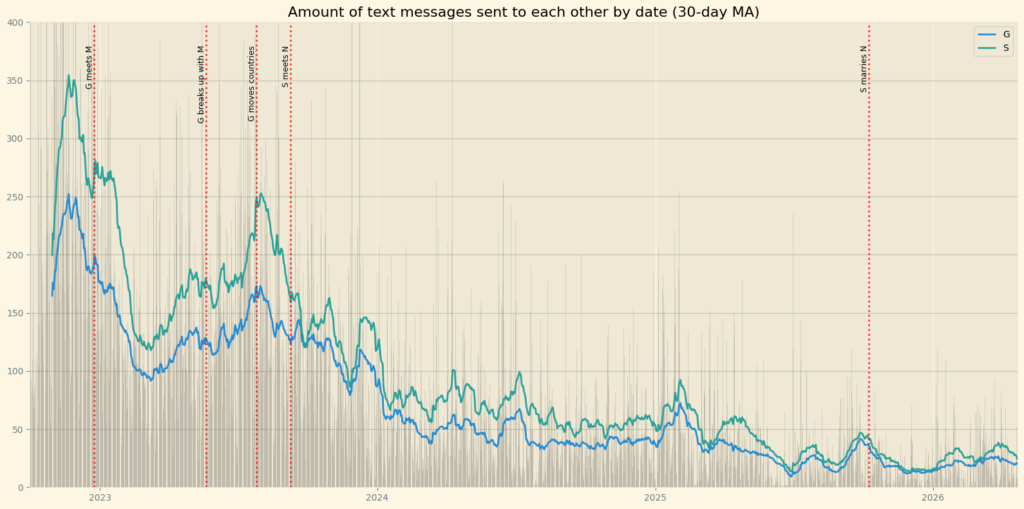
Navigating the slow drifting apart of a childhood friendship isn’t just about noticing a drop in message count—it’s about feeling the subtle shifts beneath the surface. When you comb through years of texts like the original poster did, patterns emerge that reveal more than just communication habits; they highlight emotional distances growing quietly over time.
It’s fascinating, and honestly a bit painful, to see how life’s changes—moving countries, new relationships, evolving priorities—reshape connections. As the Reddit story about co-parenting shows, relationships evolve amid new responsibilities and tensions, often blurring lines between roles and expectations. Unlike that raw emotional tension, the childhood friendship break-up unfolds as a slow fade, punctuated by missed calls, fewer check-ins, and evolving interests, not dramatic confrontations.
These breakups ignite a complicated mix of nostalgia and acceptance. You revisit laughter shared and moments missed, realizing some friendships aren’t meant to last forever but that doesn’t erase their impact. It’s less about “breaking up” and more about two people growing in different directions. I remember seeing a similar pattern with a friend of mine after college—years of daily texts reduced to occasional birthday wishes. We’re both busier, living different lives, but those early years still hold an unspoken reverence.
At its core, understanding this emotional ebb involves honoring the past without clinging to it, acknowledging the loss, and allowing space for new connections—because friendships, like seasons, have their rhythms.
The Unique Challenges of Childhood Friendships Ending
Childhood friendships carry a special weight. They’re built on shared histories, playground secrets, and all the awkward growing pains before adulthood smooths out our edges. When these bonds start to fray, especially over years and distances, it’s not just about less texting or missed hangouts—it feels like losing a part of your own past.
What stood out in the Telegram message analysis was just how subtle the shift can be. It’s rarely a sudden fracture; instead, a slow tapering off of communication, often masked by changes in life circumstances—moving abroad, new relationships, different priorities. It’s easy to rationalize: “We’re just growing apart.” But behind those words is a bittersweet truth. These childhood connections are often the first deep emotional anchors we form, and watching them drift can be quietly disorienting.
It reminds me of a friend who once documented their decade-long friendship via chat logs. As work, families, and relocations took over, the conversations turned from daily banter to occasional check-ins and then silence. The absence was palpable in their carefully plotted timeline, a grief made visible by raw data. Yet, unlike romantic breakups, these friendships aren’t always mourned openly, even though their end can sting just as much.
Distance and evolving identities challenge these bonds uniquely; they demand intentionality to maintain, or else the shared past just becomes that—a past. Recognizing this slow drift is tough but crucial. It opens space to cherish the friendship’s legacy and assess if—and how—to nurture it moving forward.
How Digital Communication Reflects Evolving Relationships
Digital communication—texts, DMs, even game chats—acts like a living diary of our relationships, especially close friendships. The Telegram analysis shared by the original poster is a perfect example: tracing message frequency over 3.5 years reveals how physical distance and life changes shift the rhythm and intimacy of a friendship.
What I find fascinating is that while texts might seem trivial, their ebb and flow mirrors deeper emotional currents. Early on, daily hundreds of messages might signify shared routines, jokes, and emotional support. As priorities change—whether moving countries, entering new relationships, or juggling busy lives—the message count drops, not necessarily signaling a cold break but a natural reshaping.
A real-world example: I used to speak with a childhood friend multiple times daily when we lived in the same city. After I moved abroad, our messages shrank to weekly check-ins, often about significant life updates rather than constant banter. It felt less “close,” but it wasn’t distant; it was evolving.
Of course, on platforms like Reddit, users debate whether a decline to ~20 daily texts equates to estrangement or just a matured friendship phase. Hacker News discussions often focus more on how tech (like Telegram’s export tools) enables such self-reflection, while Stack Overflow lacks much discussion—understandably, since this topic is more human than technical.
Ultimately, digital traces provide an honest, if imperfect, lens into how human bonds adapt and shift with time and circumstance.
Why Text Messages Are Essential Evidence
Text messages are like the invisible ink of friendships—they often reveal the subtle shifts that conversations or memories alone wouldn’t capture. When I dug into 3.5 years worth of Telegram chats with my childhood best friend, what stood out wasn’t just the amount of messages but how the patterns traced the rise and fall of our connection over time. Texts don’t lie about frequency, tone, or the topics we chose to linger on (or avoid).
In today’s scattered world, where people drift apart physically and emotionally, texts often become the ground zero of our relationships—a record of what got said, ignored, or left hanging. For example, after I moved countries, our chats were all we had besides the occasional game of CSGO to stay close. The slow decline in messages wasn’t just in volume but in the warmth behind them. It’s one thing to remember a friendship fading; it’s another to see it unfolding line by line, day by day.
What’s fascinating, too, is how this evidence is less subjective than memories or impressions that fade or get romanticized. Unlike memories that blur or paint roses, text logs offer a raw, chronological trail of emotional investment. Real-world insight: a friend once reviewed years of messages with his estranged sibling and realized their “drift” wasn’t because of a big fight but rather a series of small silences that snowballed. The texts became a map of their separation.
In sum, texts are essential because they don’t just tell the story—they show the story. And for anyone trying to understand a fracture in their relationship, they’re an irreplaceable starting point.
The Reliability of Text Messages as a Timeline of Events
Text messages are a weird kind of diary—imperfect, fragmented, but deeply revealing. When I looked back over years of Telegram chats with my childhood best friend, I realized how much these conversations served as a surprisingly solid timeline of our relationship’s highs and lows. Unlike memories, which fade or twist over time, texts are stamped with dates, revealing not just what was said but *when* and *how* interaction patterns shifted.
But here’s the catch: texts provide context without always giving *why*. For example, noticing a decline in message frequency helps paint a picture of growing distance, but it doesn’t fully explain the messy feelings or life changes that caused it. Plus, texting styles vary widely—some friends message hundreds of times a day, others barely once a week—which muddles what “normal” communication looks like in any given friendship.
Take the case of the Reddit community member who documented their co-parenting texts and custody exchanges. The raw numbers told one story—lots of favors done by one side—but the nuances of emotional labor and shifting boundaries only came alive through careful interpretation alongside the messages.
Bottom line: texts are incredible for building a timeline, but interpreting what that timeline means requires context, compassion, and sometimes a bit of detective work. They’re a map, not the whole territory.
Benefits of Using Text Conversations for Reflection and Clarity
When it comes to unpacking complex emotions or understanding how relationships evolve, text message archives can be surprisingly revealing. There’s something about seeing a conversation stretched over months or even years that gives you a bird’s eye view on the subtle shifts—the highs, the silences, the unspoken frustrations—that are easy to miss in the moment. Unlike memory, which is notoriously selective and tinted by emotion, texts preserve those raw traces of interaction, giving clarity that feels both intimate and objective.
For example, in the case of someone analyzing 3.5 years of messages with their best friend, the frequency and tone of communication told a story they hadn’t knowingly seen before. It wasn’t about blaming or lamenting but about understanding how distance, life changes, and shifting interests naturally reframe relationships. Seeing the actual messages—and their ebbs and flows—helped them process the friendship’s transformation with a sense of calm acceptance rather than confusion or hurt.
In real life, this kind of textual reflection can also serve as a self-check: when you scroll back and see how often you reached out versus how often the other did, or how responses became shorter or delayed, it grounds your feelings in something concrete. It’s not a perfect method, but it’s a fresh way to reassess connections and, often, to find peace with their evolution.
Documenting the breakdown of a childhood friendship through text messages offers a unique and intimate perspective on how relationships evolve and sometimes deteriorate over time. This approach not only provides concrete evidence of shifting emotions and misunderstandings but also highlights the complexities of communication in the digital age. Reflecting on these exchanges allows for a deeper understanding of the factors that led to the friendship’s end, while also offering valuable lessons about empathy, forgiveness, and personal growth. By preserving these moments in a written format, the process becomes both a cathartic experience and a meaningful archive of a significant chapter in life. Ultimately, this exercise underscores the importance of recognizing and processing emotional experiences thoughtfully, encouraging readers to consider their own relationships and the role communication plays in nurturing or dismantling them.