


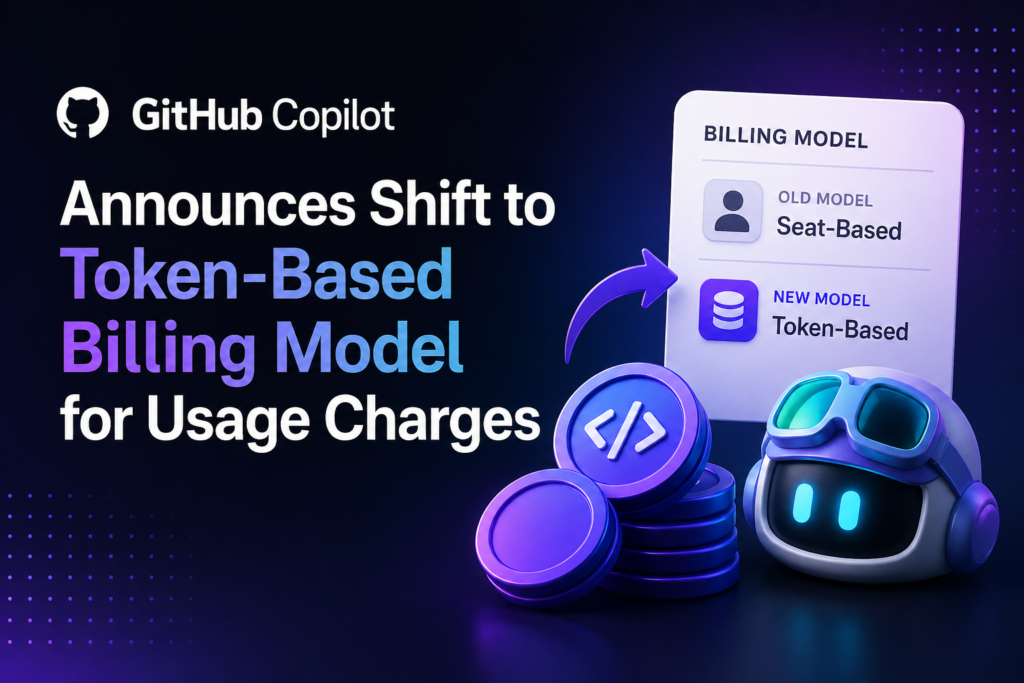
GitHub Copilot’s Shift to Token-Based Billing: What It Means for Developers
GitHub Copilot’s move from a flat premium request count to a token-based billing system is stirring up some real conversation—and not all of it positive. The change means every plan now includes a monthly allotment of “GitHub AI Credits,” with usage tracking input, output, and cached tokens. Plus, if you run out, you’ll need to buy more credits, and those fallback experiences where your coding assistant kept running on a lower-cost model? Gone. For many, this feels like a double whammy—usage is not only metered more precisely but the multiplier hikes on model usage (e.g., Claude Opus skyrocketing from ×3 to ×27) dramatically increase potential costs.
This shift has spurred some users on Reddit to cancel their subscriptions outright, echoing a broader frustration: it’s no longer as worry-free or predictable as before. For small indie developers or hobbyists, this might mean reconsidering their workflow or even going back to manual coding, as one commenter joked—“Welp, looks like I’m going back to coding everything myself.”
Interestingly, this change contrasts with how other platforms like Quora’s Poe are exploring revenue sharing per message, and Google Cloud’s Vertex AI is focusing on broadening enterprise control without a harsh token hit. It highlights how different AI ecosystems balance cost, accessibility, and user control.
A real-world example: A startup focused on rapid prototyping found Copilot invaluable because of its “always-on” assistance. With the new model, they risk unpredictable monthly bills they can’t fully budget for, threatening their lean operation. This serves as a cautionary tale that transparent, user-friendly billing models become essential as AI tools cement themselves in developers’ daily lives.
Introduction to GitHub Copilot
GitHub Copilot has been a game-changer in the world of software development since its debut, offering AI-powered code suggestions right in your editor. Powered by sophisticated language models trained on vast amounts of open-source code, it acts like a seasoned pair programmer who never sleeps — spotting errors, suggesting snippets, and sometimes even writing whole functions for you. For many developers, Copilot has become an indispensable part of their workflow, speeding up mundane coding tasks and helping to overcome those notorious “blank page” blues.
What’s interesting is how deeply integrated Copilot is into GitHub’s ecosystem, supporting languages and frameworks across the board and now extending into code reviews and pull requests. That said, it has also sparked discussions about reliance on AI and the costs associated with such powerful tools, especially as usage scales.
Take one software company I know: their junior developers rely heavily on Copilot to accelerate feature development, while senior engineers use it mainly for drudgery—like generating boilerplate code. This blend highlights Copilot’s versatility but also underlines why billing changes could impact teams differently depending on how they use it.
With the upcoming shift to a token-based billing model, understanding Copilot’s roots and evolving role helps frame why this change feels so significant to its users. It’s more than just a billing tweak; it’s a shift that could alter how teams strategize their AI-assisted coding.
Overview of GitHub Copilot as an AI-Powered Coding Assistant
GitHub Copilot has firmly established itself as a go-to AI companion for developers, powered by advanced language models designed to autocomplete code, suggest fixes, and even generate entire functions. Think of it like having a seasoned pair programmer who never gets tired—always ready to chip in a smart suggestion or help you break through tricky programming blocks. Copilot supports a wide range of languages and frameworks, making it versatile for everything from quick scripts to large-scale software projects.
In practical terms, Copilot significantly speeds up mundane coding tasks. For example, I remember a colleague who used Copilot during a tight deadline sprint to rapidly scaffold a REST API backend—a process that might have taken hours was cut down to just minutes because Copilot filled in repetitive boilerplate code accurately. Of course, it’s not perfect; sometimes its suggestions need tweaking or don’t align perfectly with your code style, reminding us that human review remains essential.
What makes Copilot stand out isn’t just autocomplete — it understands context within files and even across multiple files, offering surprisingly intuitive completions. But, with the recent news about shifting to a token-based billing model, many developers are wondering how this will impact their workflow and costs—especially since usage will now be calculated based on tokens, including input and output, instead of flat subscription limits. This shift echoes a broader trend in AI services moving towards pay-as-you-go models, which might push teams to optimize how often and how extensively they leverage AI-driven coding aids.
The Impact of GitHub Copilot’s Shift to Token-Based Billing on Developer Productivity and Code Generation
GitHub Copilot moving to a token-based billing system feels like a double-edged sword for many developers. On one side, the move to usage credits tied to token consumption introduces more granularity and arguably fairness in billing—heavy users pay proportionally. But the reality is more complex. The loss of fallback experiences means if your credits run out, you don’t get a cheaper grace period to keep going, which some developers relied on to maintain flow during crunch time.
From a productivity angle, this could create some anxiety around how liberally to lean on Copilot. Will developers hesitate to ask for suggestions or code completions as freely as before? I’ve heard whispers from devs who already canceled subscriptions fearing unpredictable bills. In a tight project timeline, cutting down AI assistance might slow things down more than saving a few bucks.
This contrasts a bit with community-driven options like Ollama’s open-source Gemma models, where you “bring your own compute” and avoid surprise costs, though that requires more setup and management.
Real-world example: A startup I know leaned heavily on Copilot for rapid prototyping. When this billing change hit, their lead developer started micromanaging AI token usage, ironically leading to more manual coding and longer hours. Productivity gains felt compromised.
At the end of the day, token-based billing nudges developers to balance cost and convenience more strategically. It’s less seamless than the previous all-you-can-code model, but perhaps a necessary evolution as AI scales in software development.
2. Current Billing Structure of GitHub Copilot
Until now, GitHub Copilot’s billing model was pretty straightforward: users paid a flat monthly or yearly subscription fee, which granted them access to a set amount of premium requests or completions. This “all-you-can-code” vibe made it simple for most developers to budget their AI-assisted coding sessions without worrying too much about hidden costs.
The billing was primarily usage-count based — meaning Copilot tracked how many suggestions or code completions you used, often described as premium requests. If you hit your limit, Copilot would fall back to a cheaper, less sophisticated model, allowing you to keep working, albeit with a downgraded AI experience. This fallback was a smart buffer since it avoided outright stopping assistance, which many users appreciated.
However, this system began showing cracks as newer, more complex models with varying computational demands were introduced. The flat-rate approach didn’t account for the different “weights” or token costs between models like GPT-4, Claude, or Gemini. Some premium AI interactions cost much more to run behind the scenes than others, so paying the same regardless of usage wasn’t sustainable.
For example, a developer using Copilot extensively during a tight sprint with heavier models might end up consuming disproportionate system resources, putting a strain on GitHub’s infrastructure. Meanwhile, lighter usage with simpler completions barely moved the needle. This discrepancy set the stage for the shift towards a token-based billing model, aiming to align cost with actual consumption.
How GitHub Copilot’s Old Subscription and Usage Charges Worked
Before this big shift to token-based billing, GitHub Copilot’s pricing was pretty straightforward—at least on the surface. Users subscribed to a plan, often monthly or annual, that included a certain number of “premium requests” (PRUs). Think of these PRUs like a quota on how many times the AI would assist you with code suggestions or completions. If you hit your limit, you either waited for it to reset next month or fell back on a less powerful, cheaper model that still offered some functionality. This fallback option was a kind of safety net that kept your workflow going, albeit with fewer bells and whistles.
This model was simple to grasp but had its quirks. Developers often found themselves juggling between being frugal with their usage and pushing hard against the limits—sometimes unexpectedly running out of PRUs mid-project. For small teams or individual coders, the fixed monthly fee was predictable but sometimes felt like paying for AI muscle you didn’t fully use. For organizations, managing and forecasting costs based on these requests could be tricky, especially if demand spiked unpredictably.
One real-world example: A startup I spoke with used Copilot heavily during product sprints and noticed they’d burn through PRUs quickly on crunch days, leading to temporary loss of the fallback experience and causing frustration. They ended up rationing usage or paying for higher tiers preemptively, which felt like an ugly workaround rather than a solution.
The upcoming token-based billing aims to solve some of these pain points by correlating cost more directly with actual AI consumption—but, as with any shift in pricing, it’s not without grumbles from the community.
Limitations and Challenges of the Existing GitHub Copilot Pricing Model
When GitHub Copilot first rolled out, its pricing model was simple: a flat monthly fee with a quota on premium requests (PRUs). For many developers, this capped system seemed fair—elastic enough to cover typical use without unexpected charges. However, it also had some glaring limitations that are only becoming more visible as AI coding tools become central to daily workflows.
One major issue was the abrupt halt in AI assistance once a user hit their quota. Yes, there was a fallback to a cheaper, less capable model, but it wasn’t seamless. It created a frustrating bump in productivity, especially for devs deep in problem-solving or debugging. Imagine being knee-deep in a complex function and suddenly losing access to the robust AI help you were relying on. The inability to scale usage smoothly became a real pain point.
Another challenge was the opaque nature of what counted as a “premium request,” leading to confusion and poorly optimized billing expectations. Organizations found it tough to budget or accurately forecast Copilot costs, especially when some models disproportionately consumed more resources.
A telling real-world example comes from a company I know that had to restrict Copilot usage to a handful of devs simply because the unpredictable billing risks clashed with tight budgets. This bottleneck runs counter to the promise of AI assistance democratizing coding productivity.
The switch to a token-based billing model aims to tackle these gaps by directly linking cost with token consumption, but the transition brings its own challenges, as the community is already debating about value and predictability.
3. What is Token-Based Billing?
GitHub Copilot’s shift to token-based billing marks a clear departure from the more straightforward “premium request units” model many developers were used to. Instead of paying per request or simply having a monthly quota of AI suggestions, users will now consume “GitHub AI Credits” based on tokens processed — including input, output, and even cached tokens. To break it down, tokens roughly correspond to text fragments, so long or complex prompts, or hefty generated outputs, will burn credits faster.
What makes this change tricky is the move away from fallback models. Previously, if you hit your limit, Copilot would automatically switch to a cheaper AI model to keep you working. Those safety nets vanish under token billing. Now, it’s strictly tied to your credit balance and how admins allocate budget, which means you could unexpectedly hit a hard stop in your coding flow if your credits run out.
A real-world angle: imagine an experienced dev on a tight team budget. Their code review tasks start consuming both AI credits and GitHub Actions minutes, increasing total costs. Suddenly the team needs to balance how much AI they use against their budget or risk interruptions.
Reddit reactions have been mixed but leaning negative, with many users already canceling over uncertainty and potential cost hikes. While Hacker News had little official chatter, the community vibe hints that this token billing, combined with higher multipliers for newer AI models, might push some folks to explore self-hosted options like Ollama or other open-source allies.
What Exactly Is Token-Based Billing in Software Services?
Token-based billing has been gaining traction among AI services lately, and GitHub Copilot’s shift to this model shines a light on why. In the simplest terms, instead of charging users a flat fee or counting specific actions like requests, the cost is based on the number of “tokens” processed by the AI. Now, a token roughly corresponds to a piece of text—could be a word, part of a word, or even punctuation—that the AI reads or generates. So every input you send and every output you receive from Copilot eats up tokens, which then translate into billing credits.
The switch isn’t just a billing sleight of hand; it’s a more granular way to measure actual usage, especially important for models where complexity and length vary widely. Copilot, for example, includes input tokens, output tokens, and even cached tokens in their calculations. For developers, that means a long function or complex prompt naturally costs more, reflecting true resource use.
But it’s not all sunshine. The community’s reaction has been mixed—some folks appreciate the “pay for what you use” fairness, while others worry about unpredictability and increasing costs, especially as Copilot dropped fallback options and added multipliers that can spike token costs dramatically. I’ve heard from devs who canceled their subscriptions, feeling that familiar “time to write my own code” frustration creeping back.
A real-world example comes from an AI-powered writing tool I’ve used: shifting from flat-rate billing to token-based pricing made me rethink how I structured prompts to avoid bloated costs. Similarly, Copilot users might start trimming or simplifying code suggestions to keep token usage in check.
In any case, token billing is clearly the future—for better or worse. If you’re a heavy AI user, understanding how tokens add up is now not just optional, but essential budgeting knowledge.
Benefits of Token-Based Billing Models for Users and Providers
Switching GitHub Copilot to a token-based billing structure isn’t just a random pricing shuffle; it’s a move with notable pros and cons for both users and GitHub itself. On the user side, token-based billing offers a clearer link between what you pay and what you actually use. Instead of flat fees or credits based on arbitrary limits, you pay for the precise AI resources consumed, including input, output, and caching tokens. This can be a win for developers who want granular control—especially in teams tightening budgets or optimizing workflows.
However, the community backlash—“like many, I cancelled”—signals friction from losing fallback options and the unpredictability this model may introduce. For example, a solo developer experimenting across multiple projects might suddenly face unexpected costs if the usage spikes, making budgeting more challenging without careful monitoring.
From the provider’s perspective, token billing allows GitHub to better align revenue with actual API resource usage, smoothing out costs tied to expensive large models like GPT-5.4, whose multiplier just skyrocketed from ×1 to ×6 under the new plan. It essentially encourages efficiency and models usage at scale, reducing waste. GitHub’s ability to track tokens precisely means more accurate billing and potentially more personalized plan options down the line.
A parallel can be drawn to cloud computing—AWS shifted years ago from flat VM rental fees to per-second billing, which initially caused headaches but ultimately gave users and providers more fairness and transparency. GitHub Copilot’s transition feels similar, offering benefits for those willing to adapt their usage habits, but definitely shaking up established workflows.
GitHub Copilot’s transition to a token-based billing model marks a significant evolution in how users are charged for AI-assisted coding. This shift aims to provide more granular and transparent cost management aligned with actual usage, addressing concerns about unpredictable expenses under previous pricing structures. By enabling developers and organizations to pay according to the tokens consumed during code generation, GitHub Copilot fosters greater control and flexibility, which is essential for budgeting and resource allocation. Moreover, this model encourages more efficient use of the tool, potentially driving higher productivity and innovation. While the change may require users to adapt their workflows and budgeting practices, it ultimately reflects GitHub’s commitment to delivering a scalable, fair, and user-centric AI coding assistant. As AI continues to integrate deeper into software development, GitHub Copilot’s token-based billing sets a precedent for future pricing strategies in this rapidly evolving landscape.
Explore Related Content
- how obfuscated code can appear unexpectedly in git merge commits but not in parent branches
- killerpdf 1.2.0: free open-source pdf editor for windows with self-install, password protection, and flatten features
- effective strategies to encourage developers to actively participate in code review processes


